Newtonverfahren
Dieser Onlinerechner nutzt das Newtonverfahren (auch als Newton-Raphson Methode bekannt), um die Wurzeln (oder Nullen) einer reellen Funktion zu erstellen.
Diese Webseite exisiert dank der Arbeit von den folgenden Menschen:
 | Timur
|
Stefan Roesner
|

Der Inhalt ist unter der Creative Commons Namensnennung / Weitergabe unter gleichen Bedingungen 3.0 (nicht portiert) lizenziert. Dies bedeutet, dass Sie diesen Inhalt unter den gleichen Lizenzbedingungen frei weitergeben oder ändern dürfen, jedoch mit Zuordnung zum Entwickler indem Sie einen Hyperlink auf Ihrer Webseite zu dieser Arbeit https://de.planetcalc.com/7748/ platzieren. Des Weiteren ändern Sie bitte keine Verweise auf das Originalwerk (falls vorhanden) das in diesem Inhlat vorhanden ist.
Dieser Onlinerechner nutzt das Newtonverfahren (auch als Newton-Raphson-Verfahren) unter Verwendung des Abwandlungsrechner, um die analytische Form der Abwandlung der gegebenen Funktion zu erstellen. Unter dem Rechner können Sie ein paar theoretischen Informationen dieser Methode finden.

Newtonverfahren
Newton–Raphson Verfahren1
In der numerischen Analyse ist das Newtonverfahren (auch als Newton-Raphson Verfahren bekannt), benannt nach Isaac Newton und Joseph Raphson, eine Methode um sukzessive bessere Annäherung and Wurzeln (oder Nullen) einer reellen Funktion zu finden.
Dieses Verfahren startet mit einer Funktion f, die über die reellen Zahlen x bestimmt ist, die Funktionsableitung von f‘ und einer anfänglichen Schätzung xO für die Wurzel der Funktion f. Wenn die Funktion die in der Ableitung der Formel getroffene Annahmen erfüllt und der anfängliche Schätzung nah ist, dann ist eine bessere Schätzung x1.
In der Geometrie ist, (x1, 0) der Schnittpunkt der x-Achse und des Tangens des Graphens von F bei (x0, f(x0)).
Dieser Vorgang wird solange als wiederholt, bis ein ausreichend genauer Wert bestimmt ist.
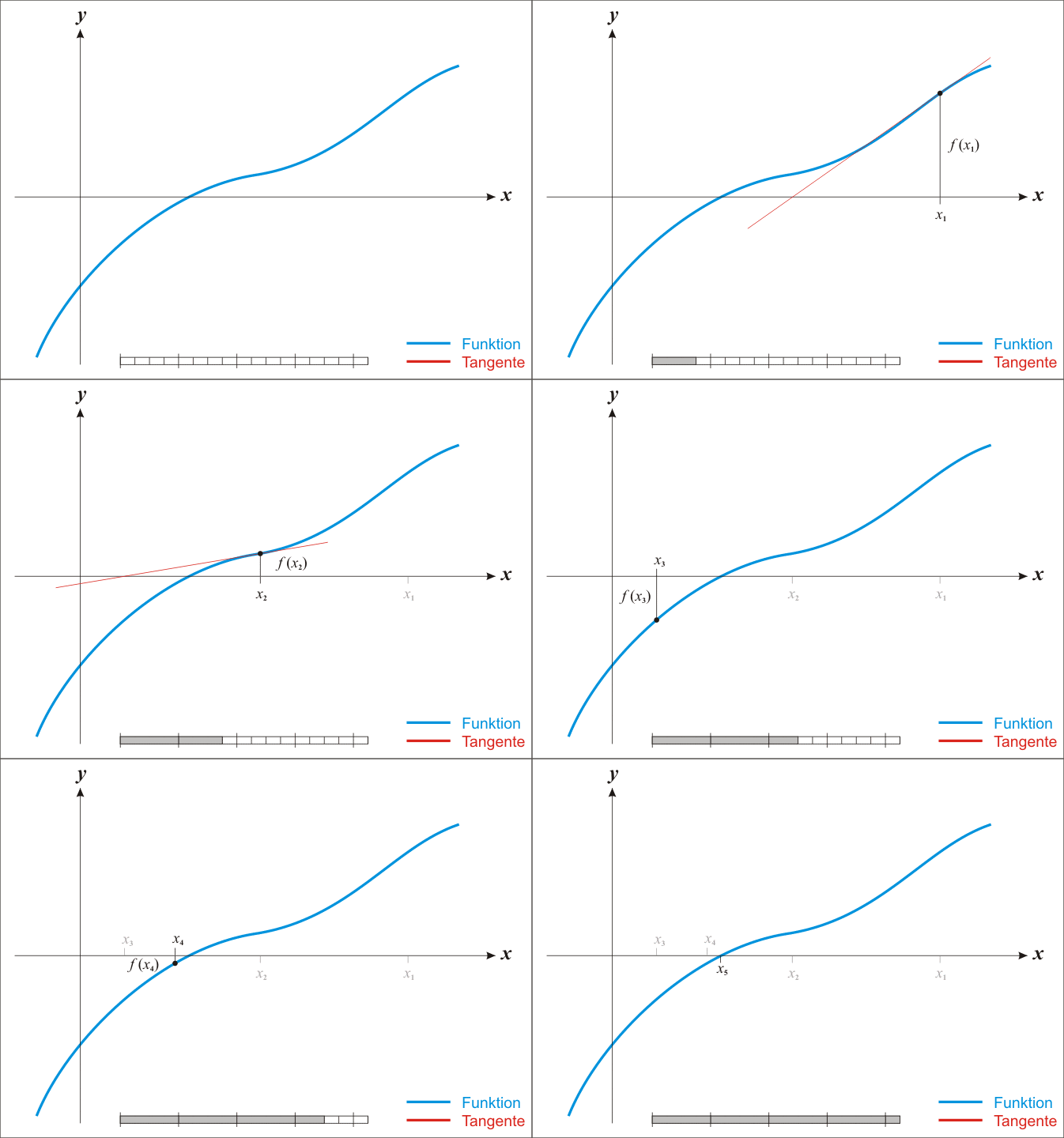
Die Idee dieses Verfahrens besteht wir folgt: man startet mit einer anfänglichen Schätzung, die relative nah zur wahren Wurzel ist, dann wird die Funktion durch den Tangens (welche man mit den Rechenarten berechnen kann) angenähert, und dann wird der X-Achsenabschnitt des Tangens bestimmt (was man leicht mit der Elementaralgebra erreichen kann). Dieser X-Achsenabschnitt ist normalerweise eine bessere Annäherung als die anfängliche Schätzung, und dieses Verfahren kann häufiger verwendet werden.
Das Newtonverfahren ist eine extrem wirksame Methode, da die Konvergenz normalerweise quadratisch ist: Wenn das Verfahren an der Wurzel konvergiert, ist die Differenz zwischen der Wurzel und Annäherung bei jedem Schritt quadriert (die Anzahl der genauen Ziffern verdoppeln sich ungefähr). Aber dieses Verfahren hat auch ein paar Schwierigkeiten: Schwierigkeiten mit der Berechnung der Funktionsableitung, Versagen des Verfahrens beim Konvergieren der Wurzel, wenn die gegebenen Annahmen für die quadratische Konvergenz nicht erfüllt wird, langsames konvergieren für Wurzeln mit der Multiplizität größer als 1.
Kommentare